Madagascar's government is buying back vanilla stocks: smart move or band-aid?
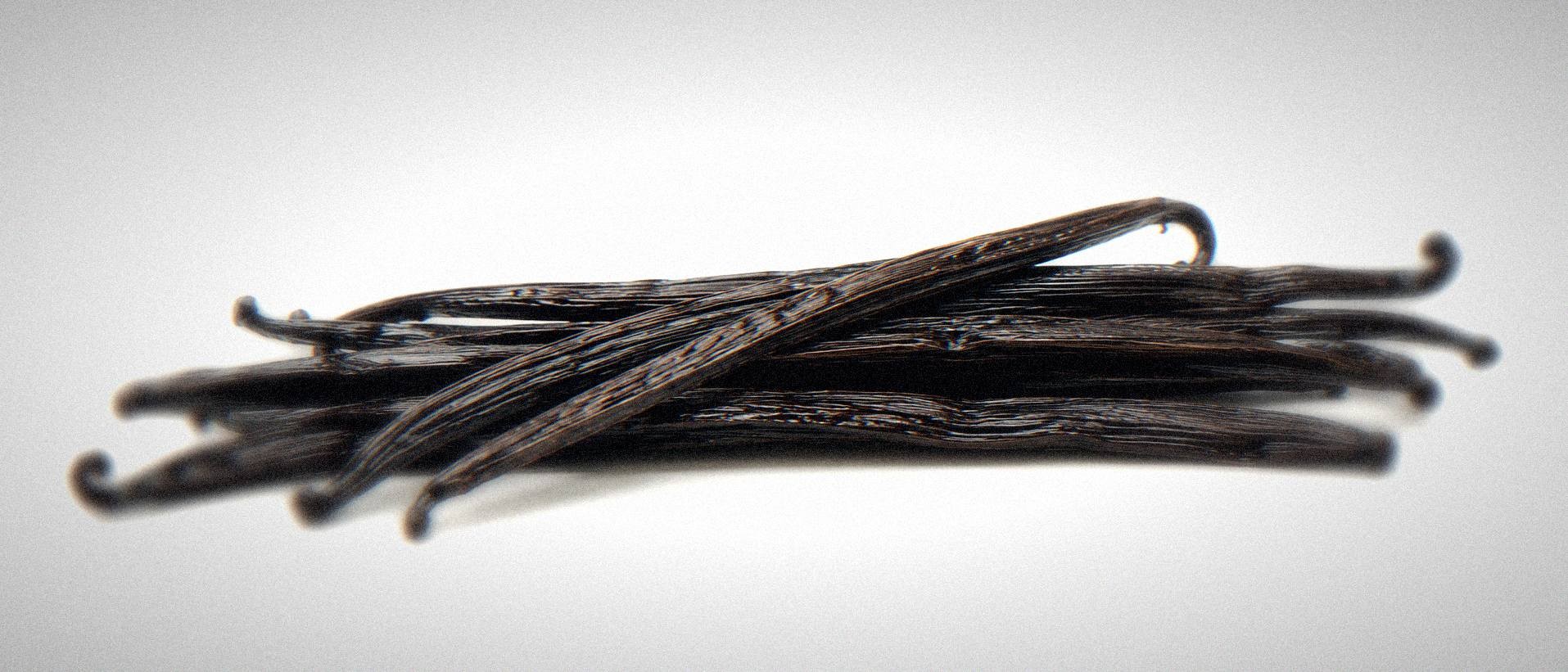
In late 2025, Madagascar removed a safeguard that had been in place for years: it dissolved the National Vanilla Council (CNV), the body that set an export floor price and regulated licenses. The immediate result was a market left to its own devices, collapsing local prices, and a government now trying to regain control through a different lever, direct buybacks of unsold stock.
A market without a backstop
Since the removal of the $250/kg floor price that had protected the sector since 2020, export prices have crashed, down to $50-70/kg for some lots when quotes still topped $200 a year earlier. With no regulator, export licenses multiplied, new operators and cooperatives entered the market, and ports previously closed to vanilla reopened. On paper, more competition. In practice, a sector that lost its collective point of reference.
That’s the vacuum into which the announcement of a public buyback of unsold stock lands. The idea: absorb the surplus weighing on prices, hoping to spark a rebound.
Why operators remain skeptical
In principle, buying back stock to support a price isn’t new, it’s a classic agricultural market management tool. The problem isn’t the tool, it’s the context in which it’s being deployed. Five months after the CNV’s dissolution, no regulatory structure has replaced it. A one-off buyback with no permanent mechanism to prevent the scenario from repeating looks more like a patch than a reform.
Operators who lived through the price collapse are also asking questions about how the operation will be financed, what criteria will determine which stocks get bought, and whether the intervention risks favoring certain channels over others, in a sector where suspicions of dumping and money laundering have never fully disappeared.
What it means for international buyers
For a brand or formulator sourcing Malagasy vanilla, the current situation has one upside: prices well below where they stood two years ago, with availability broadened by the arrival of new operators. The downside is regulatory uncertainty. A market without a clear regulator is also one where traceability and quality can become harder to guarantee over time, especially if the public buyback introduces new rules mid-stream.
Prices have in fact partly stabilized since: Madagascar vanilla averaged around $200/kg in Q1 2026, down slightly from $205/kg in Q4 2025, with forecasts pointing to a $185-210/kg range for the rest of the year as long as harvests stay ample (Selina Wamucii), still nowhere near the roughly €2,000/kg historic peak, but a long way from the depths of the post-CNV crash too.
The lesson here isn’t really about the buyback itself but about the market structure that made it necessary. Until a stable regulatory framework is redrawn in Madagascar, volatility will remain the norm rather than the exception for this raw material, a dynamic explored in more depth in the mechanics behind vanilla’s price swings and in the wider pattern of scarcity across fragrance raw materials.
Public buybacks aren’t the only response taking shape on the ground. In May 2026, IFF opened a Vanilla Innovation Center in Toamasina, Madagascar’s main port, dedicated to studying vanilla quality, natural variability and post-harvest handling (Home & Personal Care Middle East & Africa). It’s a reminder that while the government experiments with market intervention, at least one major international buyer is betting on infrastructure directly at the source instead.