Nigeria's shea export ban: who holds the loss
By the LiaKea Beauty Tribe editorial team4 min read
Key figures
- Nigeria's share of world shea
Annual output of 350,000 to 500,000 tonnes, close to 40% of global supply, against about 1% of the $6.5 billion global shea market
As of
- Raw nut price after the ban
Raw shea nut prices fell by roughly a third, trading around 850 naira a kilo at the end of the last harvest season
As of
- Ban period
Six-month moratorium from August 2025, extended from 26 February 2026 to 25 February 2027. All shea exports must now pass through the Nigeria Commodity Exchange
As of
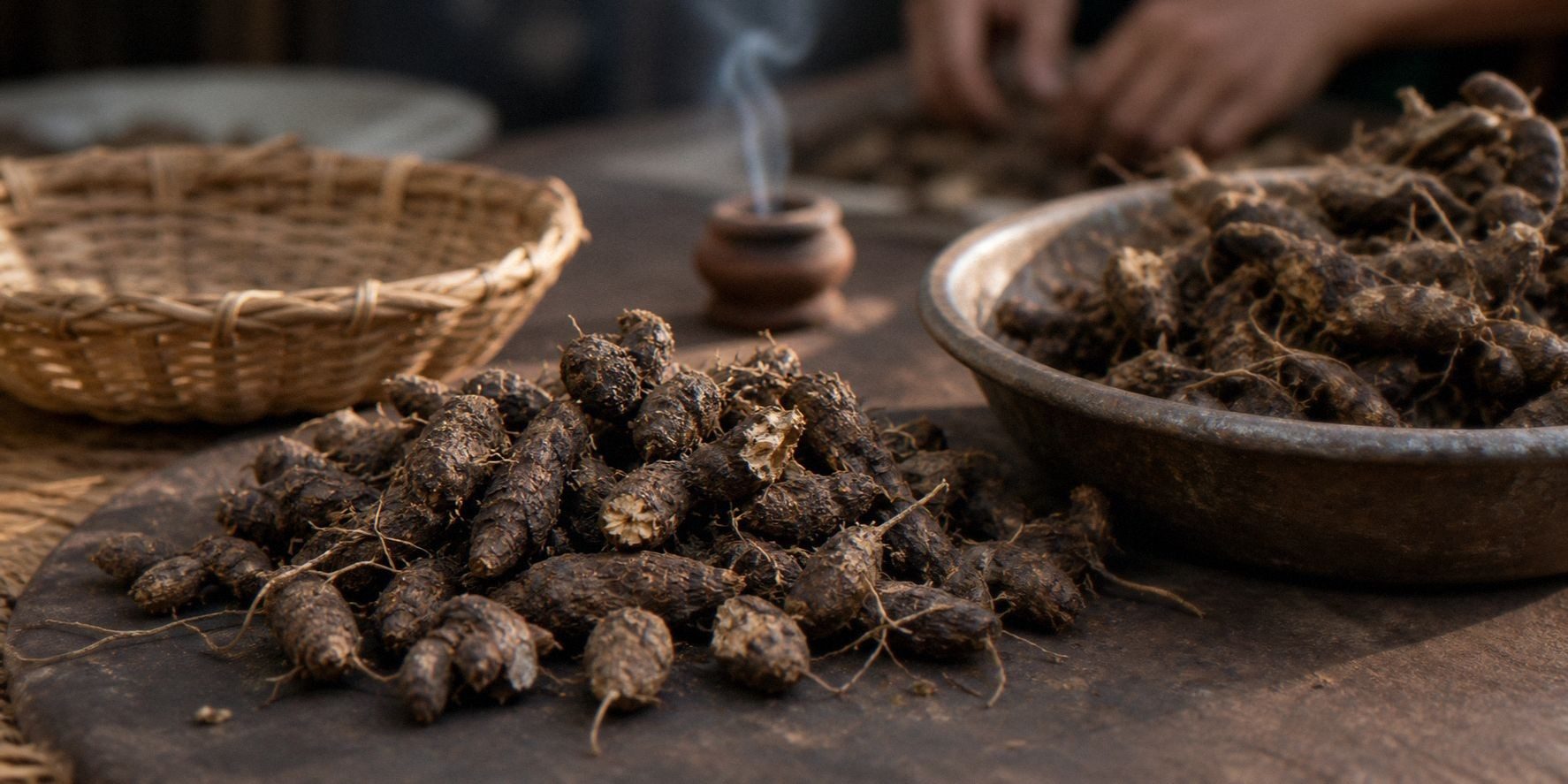
Nigeria produces 350,000 to 500,000 tonnes of shea nuts a year, close to 40% of world supply, and takes about 1% of the $6.5 billion the finished market is worth. Stated that way, the policy response is almost self-evident: stop exporting the raw nut, process it at home, keep the margin.
That is what Nigeria did, and the first measurable effect was that the price paid to collectors fell by a third.
What the Nigeria shea export ban actually does
Raw shea nut exports were banned in August 2025, initially for six months. The measure was extended on 26 February 2026 and now runs to 25 February 2027.
The extension tightened it. All shea exports must pass through the Nigeria Commodity Exchange, and the exemptions that previously allowed direct shipment of raw nuts have been removed. Processing capacity is to be financed through the Nigeria Enterprise Support Scheme.
Vice President Kashim Shettima framed it plainly: the ban “will transform Nigeria from an exporter of raw shea nut to a global supplier of refined shea butter, oil, and other derivatives”, and it is “not an anti-trade policy but a pro-value addition policy designed to secure raw materials for our processing factories”. The stated targets are $300 million in the short term and $3 billion by 2027.
Why raw nut prices fell by a third
Here is the mechanism, and it is not a criticism of the goal.
A ban removes a buyer. The export buyer for raw nuts disappeared in August 2025. The domestic buyer that is supposed to replace him is a processing industry that is still being financed, built and commissioned. Between those two events there is a gap, and during that gap the nut has fewer bidders than it had before.
Prices did what prices do with fewer bidders: raw shea fell by roughly a third, trading around 850 naira a kilo at the end of the last harvest season.
The value the policy wants to capture is real, and the multiple between raw nut and refined butter is large enough to justify wanting it. But that value only exists once the factories run. The price fall exists now.
Who carries the gap between the ban and the shea factories
Shea collection in West Africa is done overwhelmingly by women, working in the informal economy, and paid per kilo of nuts. They are the layer of the chain with no storage, no price hedge and no alternative buyer.
So the distributional question is not abstract. A policy that lowers the farmgate price today in exchange for industrial margin in two or three years is making a trade between different people, not deferring a gain for the same ones. Whether the collectors ever see that margin depends on choices that have not been made yet: who owns the factories, what they pay per kilo, and whether the commodity exchange route improves price transparency for sellers or simply adds an intermediary.
Nigerian stakeholders are themselves divided. Analysts have warned of short-term foreign exchange pressure, with exporters at risk of losing foreign buyers in the interim, and the consensus among those quoted is that the outcome depends on processing capacity arriving fast enough.
Whether a ban can work: the rest of West Africa is trying it
Nigeria is not alone. Burkina Faso, Mali, Côte d’Ivoire and Togo have adopted comparable restrictions, all with the same reasoning: the region grows the material and Europe and Asia do the processing and the branding.
That regional convergence cuts both ways for a buyer. It means the raw-nut export route out of West Africa is narrowing everywhere at once, so a sourcing strategy built on buying nuts and processing them elsewhere has a shrinking future. It also means that if the policies work, the region will be selling butter rather than nuts within a few years, which is a different commercial relationship: fewer, larger, more industrial counterparties, and less room for the direct-to-collector arrangements that traceability arguments have relied on.
What a shea buyer should do differently this season
The practical consequences are near-term and unglamorous.
Expect to buy butter, not nuts, and price the difference. The route is closing deliberately, not temporarily.
Ask who processed it, and where. A Nigerian-processed butter and a European-processed butter from Nigerian nuts are now different products commercially and, increasingly, legally.
Do not read the farmgate price as a market signal. The fall to around 850 naira is a policy artefact, not a demand signal, and treating it as a buying opportunity misreads what happened.
Watch the commodity exchange requirement. Routing all exports through a single exchange changes who sets the reference price and what documentation follows a lot. For anyone who has built sourcing on direct relationships, that is the part to understand before the next harvest.
Nigeria’s direction here is consistent with the rest of its industrial policy: registering a cosmetic as a local manufacturer costs $63 against $1,252 as an importer, a twenty-to-one advantage to making things inside the country. The shea ban is the same idea applied with a blunter instrument, and on a material where the people at the bottom of the chain cannot wait for it to work.
Source: Nigeria Extends Raw Shea Nut Export Ban to Strengthen Local Processing - Global Cosmetics News
Was this useful?
What was missing?
Noted, thank you. It goes straight to the editorial side.