Oud in the Gulf: the real sourcing story behind the region's 'liquid gold'
Global agarwood oil market
$2.5 billion in 2025, forecast to reach $4.1 billion by 2034
As of
Gulf share of global oud consumption
UAE and Saudi Arabia together account for over 60% of global demand
As of
Call it an exotic import and the story is already wrong. In the UAE and across the Gulf, oud isn’t an ingredient bolted onto a fragrance, it’s closer to a native language: burned as bakhoor before guests arrive, worn to Friday prayers, layered into a scent the way a composition builds from base to top note. Understanding the region’s fragrance market means starting from that distinction, not from the price tag alone, “for many people in the Gulf, the scent of oud feels like home before it feels like luxury.”
Not grown in the Gulf, but defined by it
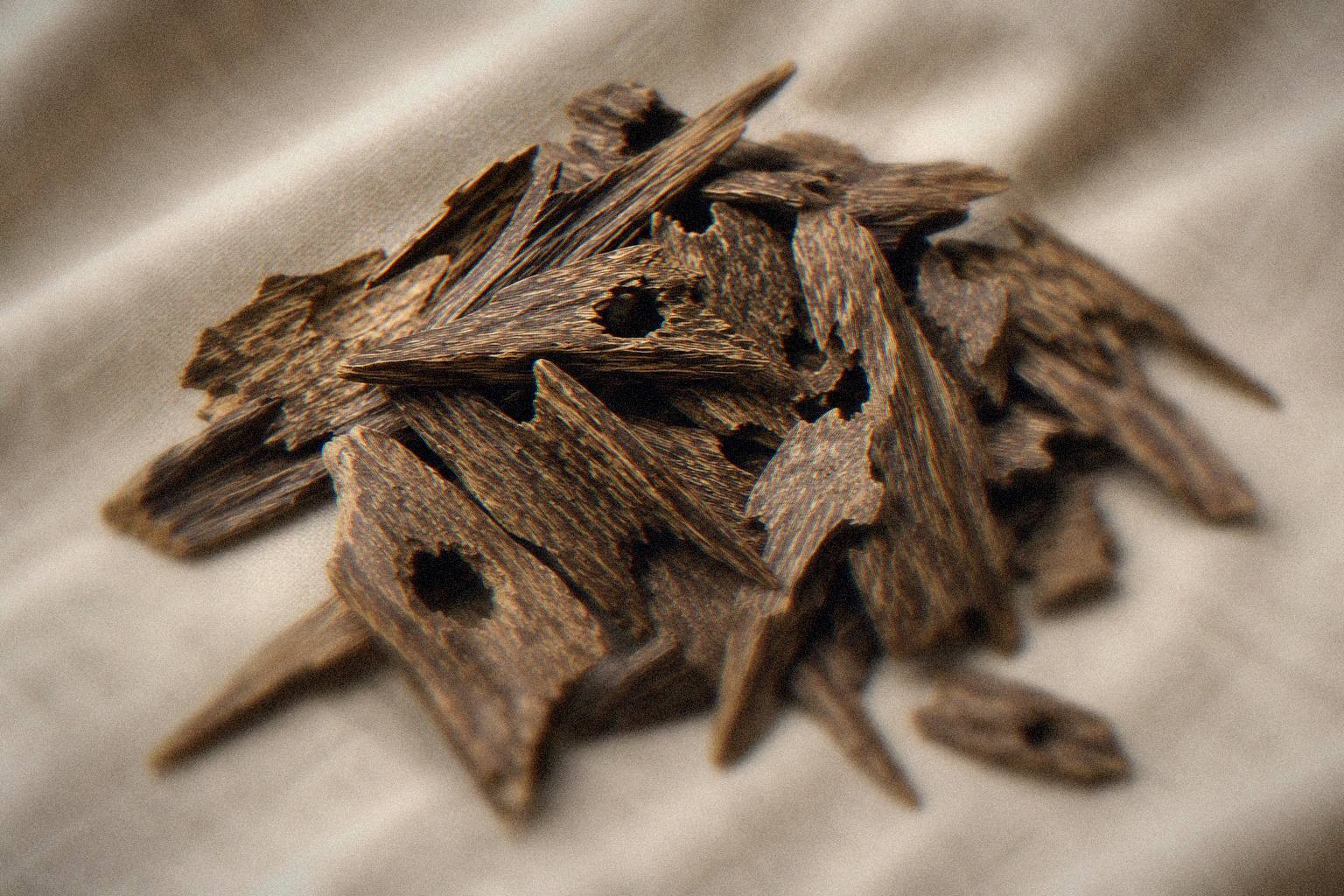
Here’s the part outsiders usually get backwards: oud doesn’t come from the Gulf. It comes from Aquilaria trees native to South and Southeast Asia, primarily Malaysia, India and Cambodia, where a natural fungal infection (or, increasingly, a deliberate injury inflicted by farmers) triggers the tree to produce a dark, fragrant resin as a defense response. The Arabian Peninsula’s role has historically been different: trading hub, refiner, and cultural authority, not point of origin. That split matters for anyone thinking about sourcing in this category. The raw material is Asian. The market that sets its value, its grading standards, and its cultural meaning is Gulf.
Why it costs more than gold
The economics explain the reverence. Natural infection takes 20 to 50 years to produce usable resin, human-induced infection cuts that to 7 to 12 years, still a generational bet for a farmer. Yield is brutal: naturally formed oud needs roughly 50 kilograms of infected wood to produce a single kilogram of oil, cultivated wood needs closer to 200 kilograms for the same yield. “Pure oud is quite expensive, priced higher than gold per gram,” says Ammar Nabeel Adam Ali of Swiss Arabian Perfumes, one of the region’s established houses. On top of that scarcity, Aquilaria and Gyrinops, the genera that produce agarwood, are listed under CITES Appendix II, meaning international trade requires export permits and documentation at every border crossing between source forest and Gulf souk.
Four forms, one ritual
What distinguishes Gulf perfumery from how oud is discussed elsewhere is the range of forms in active daily use, not just the raw material. Pure oud chips are burned directly on charcoal, scenting clothes and homes. Oud muattar is oud chips soaked in perfume and left to macerate for a month or more. Dehn el oud is the bottled pure oil, extracted straight from the chips. Bakhoor, a blended incense, rounds out the set, burned specifically before guests arrive as a hospitality signal. Perfumers and collectors in the region describe an architectural approach to layering these forms rather than wearing a single fragrance, a practice reinforced by climate as much as culture: above 40°C, light citrus and floral top notes evaporate almost instantly, while oud’s heavy, high-molecular-weight structure is exactly what survives and develops through the day.
What it means for sourcing and partnership
For an organization looking at Africa-Gulf-Asia sourcing, oud is a useful case study precisely because origin and market authority sit in two different places. Doing this well requires the same two things it takes to source sandalwood in India, another slow-growing, tightly regulated Asian tree species: patience with a multi-year biological cycle, and genuine relationships with growers rather than reliance on intermediaries, the same lesson Firmenich has applied for decades sourcing directly in India and Africa. CITES compliance adds a real, non-negotiable layer most other natural materials in this outlet’s coverage don’t carry to the same degree, a legal and administrative barrier to entry as much as a scarcity constraint, part of the same broader pattern of structural scarcity now reshaping how the fragrance industry sources noble naturals. For anyone serious about Africa-Gulf-Asia partnerships, fluency in this specific market’s own grading language, the difference between chips, muattar and dehn el oud, and its own standards of authenticity, matters as much as securing the raw material itself.